Flooring
KingFloor EP200T System
Solvent free epoxy topping for seamless, hygienic floors
SpecWorld has the Spec Pack, CSI specification and drawings for registered specifiers.
Build-up
Applied in this order, from the substrate up. Layers drawn with a dashed outline are optional.
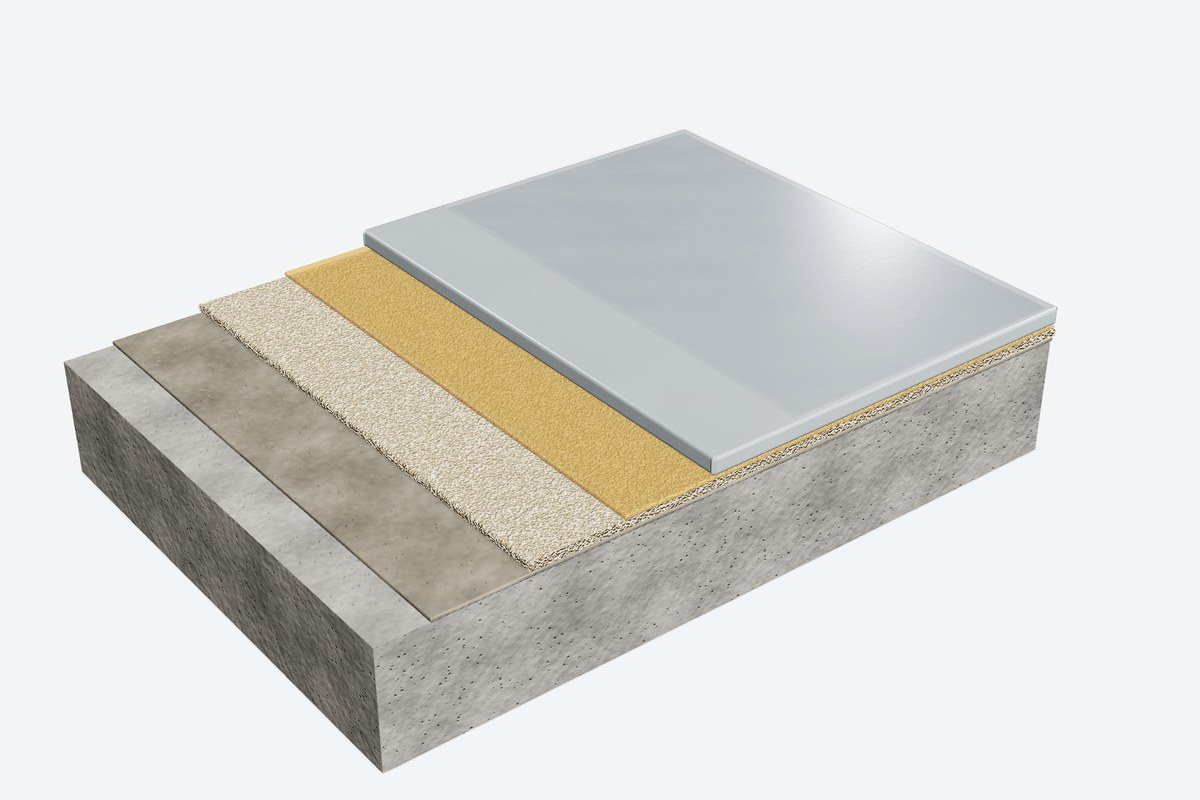
| No. | Product | Function | Rate or thickness |
|---|---|---|---|
| Substrate | Concrete floor, min. 25 N/mm², concrete RH < 80%, no rising damp | ||
| 1 | KingFloor Primer Lambswool roller, worked well into the concrete; more than one coat on porous surfaces. | Primer | 5 m²/kg |
| 2 | KingFloor AS100 Grade No. 3. Broadcast while primer is wet; allow to touch dry. | Aggregate dressing into wet primer (bond key) | 0.5 kg/m² |
| 3 | KingFloor Primer Applied just before the topping; EP200T is laid onto the uncured primer. | Second prime coat (wet tack coat) | |
| 4 | KingFloor EP200T Three-pack (base, hardener, filler) plus colour; steel-trowelled; can be coved and laid to falls. | Trowelled heavy-duty wearing course | 5 - 15 mm and above; approx. 1.4 m²/kit @ 10 mm |
| 5 | KingFloor EP25 Optional or KingFloor WD Recommended to seal against liquid spills; it reduces wet slip resistance. | Sealer | 2 coats |
Turn the build-up in 3D
Drag to turn. Click to separate the layers.
Build-up options
- Unsealed (anti-slip texture kept) or sealed with 2 coats KingFloor WD (water based) / KingFloor EP25 (solvent based)
About this system
KingFloor EP200T is a three-pack solvent free, epoxy-based topping that provides floor surfaces with a seamless, hygienic and cosmetically attractive finish. KingFloor EP200T is applied by trowel and can be coved and laid to falls and has a very good durability towards pedestrian and vehicular traffic. It also has very good resistance towards many of the chemicals commonly found in an industrial environment (consult our Technical department for further details).
Where to use
- Heavy industry factories
- Paint workshops
- Steel works
- Dairies
- Chemical factories
- Oil refineries
- Freezers and refrigerated storage